Concrete coring and core strength
Is the concrete in your structure as strong as it should be? We drill cores from the elements in question and test their compressive strength in our laboratory.
Get a QuoteRead the guide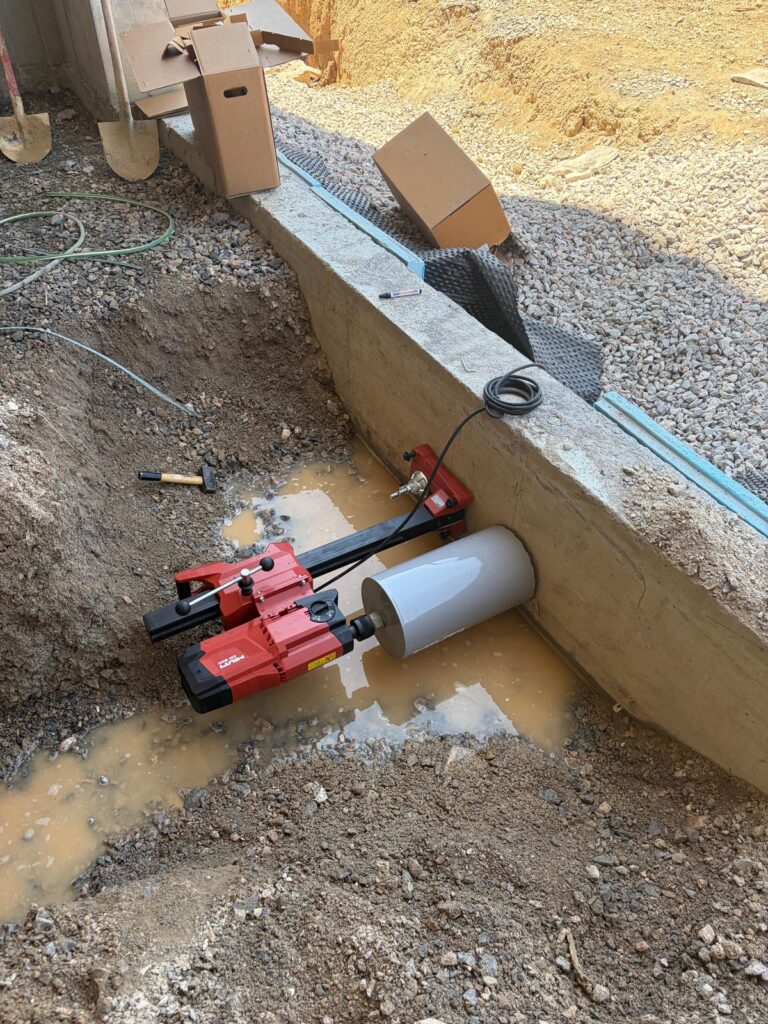
We drill concrete cores from existing structures and test them in our laboratory to determine the compressive strength of the concrete as built. Our coring is carried out with our Hilti DD 200 and Hilti DD 160 rigs, and as an independent third party we report results impartially to contractors, public authorities and project owners.
What we test
| Test | Standard | Where | What you get |
|---|---|---|---|
| Core drilling (Ø52–250 mm) | TS EN 12504-1:2019 ASTM C42/C42M-20 | Field | Labelled cores; cored elements and locations identified |
| Reinforcement pre-scan | — | Field | Rebar located before drilling |
| Rebound hammer survey | TS EN 12504-2:2021 | Field | Rebound numbers |
| Compressive strength of cores | TS EN 12390-3:2019 TS EN 12390-4:2025 | Lab | Compressive strength of each core |
| Density of hardened concrete | TS EN 12390-7:2019 | Lab | Density of each core |
| Assessment of in-situ compressive strength | TS EN 13791:2019 | Report | In-situ compressive strength assessment |
Why it matters
Cube and cylinder results show the potential strength of the concrete as delivered, whereas cores represent the concrete in the structure, including the effects of placing, compaction and curing. Core testing is therefore the accepted route when standard specimen results are low or missing, when the use or loading of a structure changes, or when the quality of existing concrete must be verified. TS EN 13791:2019 provides the framework for assessing in-situ compressive strength from core results.
What you receive
- Test report to TS EN 12504-1:2019 for each core, including dimensions, density and compressive strength
- Identification of the cored elements and core locations
- Photographs of the cores and drilling locations
- In-situ strength assessment to TS EN 13791:2019 where specified
- Calibration certificate for our compression machine on request
What we need from you
- The elements to be cored, the number of cores and their locations, marked on drawings where possible
- Structural drawings or reinforcement details, where available
- The specified concrete strength class and any existing cube or cylinder results
- The reason for testing, and whether an in-situ strength assessment to TS EN 13791:2019 is required
- Safe access to the elements, approval of the core locations by the responsible engineer, and your preferred dates for site work
Frequently asked questions
How soon do we get the results?
Core strength results are usually ready within 2–3 working days of coring. We schedule site work on weekdays and weekends to suit your programme, with field work hours of 08:00–18:00.
Why test cores if we already have cube results?
Cubes and cylinders show the potential strength of the concrete as delivered, whereas cores represent the concrete in the structure, including the effects of placing, compaction and curing. Core testing is therefore the accepted route when standard specimen results are low or missing, or when existing concrete must be verified.
Will coring cut the reinforcement?
Before drilling we scan the element to locate the rebar, and we position the cores to avoid cutting it wherever possible. The cored elements and core locations are identified in the report.
How can we check that a report is genuine?
Every report carries a QR code, a report number and a verification code. Anyone can check it on our Verify a Report page.
Guides for this service
- Concrete coring and in-situ strength
- Does concrete coring damage an existing building?
- Concrete cubes and cylinders: curing and 7/28-day strength
Ask us for a quote for concrete coring and core strength testing; we schedule site work on weekdays and weekends to suit your programme.