Asphalt coring and hot-mix testing: thickness, density, binder
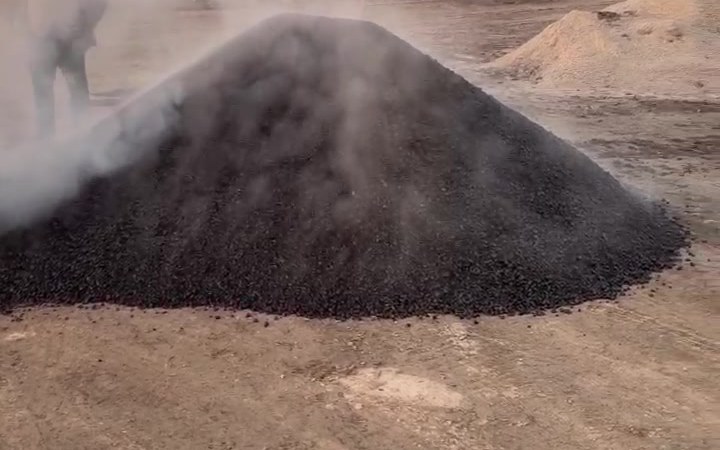
A freshly laid asphalt surface can look smooth, dark and even and still fail the specification. Layer thickness, the density of the laid material, binder content and aggregate grading cannot be judged from the surface. This guide covers asphalt core testing and hot-mix testing, what we need from the contractor and how the results are reported.
Why a road that looks fine can still fail the specification
For each bituminous layer, the project specification sets a design thickness, a degree of compaction requirement, a target binder content and grading tolerances. A good-looking surface proves none of them. Layer thickness and compaction largely govern the durability and fatigue life of a pavement. A poorly compacted layer lets water in more easily. A mix with too much binder is more prone to rutting and bleeding under high summer surface temperatures, while a mix with too little binder stays dry and can start to ravel. These problems usually show only once the road has carried traffic for a few seasons.
We are usually called after paving has finished. At that stage, coring is the practical way to see the binder course and bituminous base beneath the surface course.
Taking cores and measuring layer thickness
Cores are cut with a water-cooled diamond core drill through the full depth of the bituminous layers. Each location is recorded by chainage or site reference. Coring waits until the layer has cooled fully; a core cut from warm, soft asphalt is distorted and its measurements are unreliable.
In the laboratory each core is photographed, layer boundaries are identified and the thickness of each layer is measured at several points around the core in accordance with TS EN 12697-36:2022. Surface course, binder course and bituminous base are reported separately. If the bond between layers is poor, or a layer breaks up during cutting, we note it on the report. The full list of tests we carry out is on the asphalt coring and hot-mix testing page.
Core density and what it is compared with
A core does not measure compaction or air voids on site. What we measure is the density of the core in the laboratory. The layers are saw-cut apart and cleaned, and the bulk density of each piece is determined in accordance with TS EN 12697-6:2020. The procedure is chosen to suit the surface texture and void structure of the core and is stated on the report.
Degree of compaction (%) is the ratio of that bulk density to the reference density defined in the project specification. The reference may be, for example, the bulk density of Marshall specimens compacted in the laboratory from the same mix. The specification sets the reference and the acceptance limit; we compare the result with them. Air voids can only be calculated if the maximum density of the mix is also determined separately.
Hot mix: sampling, Marshall specimens, binder content and grading
To check the mix itself, samples have to be taken while paving is under way. Hot-mix samples are taken at the plant, from the lorry or at the paver in accordance with TS EN 12697-27:2018. The sample must be representative: material from the edge of a segregated heap, or only from the top of a lorry load, does not represent the mix. Location, time and lorry details are recorded. A sample missed on the day of paving cannot be taken later, so sampling must be planned with the paving programme.
From these samples we compact Marshall specimens with an impact compactor in accordance with TS EN 12697-30:2019; the number of blows and the compaction temperature follow the specification and mix design. Their bulk density, also determined to TS EN 12697-6:2020, can serve as the reference for core densities. Binder content is determined by reflux extraction in accordance with ASTM D2172/D2172M-26: the binder is dissolved away from the aggregate and its proportion is calculated from the loss in mass. The grading of the recovered aggregate is determined in accordance with TS EN 12697-2:2025. Both results are compared with the approved job mix formula and the tolerances in the specification. If no hot-mix sample was taken, these tests can be done on cores, but a core holds limited material and a thin layer may need more than one core from the same area.
What the contractor needs to arrange
- Traffic management: on live roads, signing, cones and, where needed, a traffic marshal are provided by the contractor or the authority. Our crew does not core without a safe working area.
- Marked core locations: agreed in advance with the supervising engineer or set by the specification, and marked by chainage or site reference. Cores taken only where the surface looks good do not represent the road.
- Project information: layer thicknesses, mix type, the approved job mix formula, the reference density and the acceptance limits.
- Access for sampling: if samples are to be taken at the plant or the paver, let us know the paving date and time in advance.
- Filling the core holes: holes should be filled and compacted with a material accepted by the specification or the engineer; an open hole lets water into the layers. Agree who fills them before the work starts.
How the results are reported
We issue a separate core report for each layer: surface course, binder course and bituminous base. It gives the core locations by chainage or site reference, the measured thicknesses, core photographs and a comparison of thickness and degree of compaction with the project values. The other tests are issued as separate test reports referencing the relevant standard. Every report carries a report number, a QR code and a verification code.
| What is determined | Sample | Standard | Compared with |
|---|---|---|---|
| Layer thickness | Core | TS EN 12697-36:2022 | Design thickness and tolerance |
| Bulk density | Core, Marshall specimen | TS EN 12697-6:2020 | Reference density in the specification (degree of compaction, %) |
| Sampling | Hot mix (plant, lorry, paver) | TS EN 12697-27:2018 | Representative sample for the other tests |
| Marshall specimens | Hot mix | TS EN 12697-30:2019 | Reference density, where the specification uses it |
| Binder content | Hot mix or core | ASTM D2172/D2172M-26 | Job mix formula and tolerance |
| Grading | Recovered aggregate | TS EN 12697-2:2025 | Job mix formula and tolerance |
Turnaround depends on the number of samples and the scope. Thickness can be measured soon after the cores arrive; density and extraction take longer because of sample preparation and drying. We confirm the delivery date before work starts. Where areas do not conform, we can core and test again after remedial work, on request.
Frequently asked questions
How long should new asphalt cool before coring?
The layer has to be fully cooled and hard. That depends on air temperature and layer thickness; a thick layer laid in summer takes longer. We judge the right time with you on site; once the road is open, coring needs traffic management.
What happens if core density comes out below the specification?
We compare the result with the reference density and acceptance limit in the specification and report it. Extra cores are often taken to define the extent of the non-conforming area. Whether remedial work or another measure is needed is for the authority and the supervising engineer to decide.
Plant sample or core: which is better for binder content?
A hot-mix sample taken during paving gives more material and also allows Marshall specimens to be made. A core represents the mix as actually laid. Start with what the specification requires; where possible, plan for both.
We can plan the scope and timing with you against your specification. The tests are listed on our asphalt coring and hot-mix testing service page; send us your paving dates and project details through our contact page.